Summer Surfing Basics

Eleanor
| 28-10-2026
 · Sport Team
Welcome, everyone. Summer brings warmer water and crowded lineups, and plenty of people grab a board for the first time.
But surfing is not just standing up on a board and hoping for the best. The basics that matter most are the ones you practice before you ever paddle out, and the safety habits that keep a good day from turning into a bad one.
Start on the right board
A long, soft-top foam board in the 8 to 9 foot range is the standard beginner choice, and it's not a compromise. Foam boards float easily, catch small waves early, and hurt less when one hits you. A 9-foot soft-top gives you a stable platform to practice popping up on, while a short hard board will sink under you and stall your progress for weeks. Rent first. Most surf shops near beginner breaks rent soft-tops for around $30 to $50 a day, so you can test a size before buying.

Read the ocean before you paddle
Spend ten minutes on the sand watching the water. Look for rip currents, which show up as darker, choppier channels between breaking waves, and note where other surfers enter and exit. A rip won't pull you under, but it will carry you out fast, so the rule is to paddle parallel to the beach until you're out of it, then head in. Also check the tide chart. Many beginner breaks work best at mid tide, and a low-tide shore break can dump you onto sand with real force.
Practice the pop-up on land
Lie on the floor and rehearse the motion until it's automatic: hands under your chest, push up, bring your back foot forward, then your front foot, and land in a low crouch with knees bent and arms out. Do it twenty times a session on dry land. The move that fails most often in the water is standing up straight too early, which puts your weight back and sends the nose of the board up. Stay low. Your knees should be bent and your chest over the middle of the board.
Follow the lineup rules
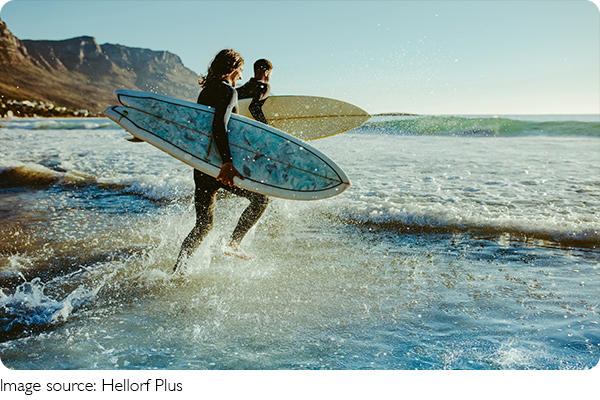
The surfer closest to the peak has the right of way on a wave, and that's the one rule that keeps a crowded summer break from turning into chaos. Don't paddle through the middle of the lineup where people are riding, go around. Hold your board to the side when you're walking into the water, never between you and the incoming waves. And if you fall, cover your head with your arms and stay under for a second before surfacing, since boards are still moving nearby.
Know your limits and exit cleanly
Fatigue is the quiet risk. Your paddling arms give out before your legs do, and that's when people get pulled into trouble. Set a time limit, maybe 45 minutes for a beginner session, and stick to it. When you're done, ride a wave in or paddle to a spot away from other surfers, then walk out. Never ditch your board and swim in unless someone is in danger, because a loose board can hit the next person.
Summer surfing rewards patience more than bravery. Stay on a soft-top, watch the water before you commit, rehearse your pop-up until your body knows it, and respect the right of way. Do those five things and you'll spend your sessions riding waves instead of fighting them. Next time you head to the beach, take ten quiet minutes on the sand first. It's the cheapest safety gear you'll ever own.