Why Stars Shine Brightly

Naveen Kumar
| 20-09-2026
 · Science Team
Welcome, and let's begin. You look up on a clear night and see thousands of points of light, each one a distant sun.
But have you ever stopped to ask why they shine at all? Most people assume stars are just burning balls of gas, like a giant campfire in space.
That's not quite right, though. Stars don't burn in the way a log does. They shine because of nuclear fusion happening deep in their cores, and the brightness you see depends on a few very different factors.
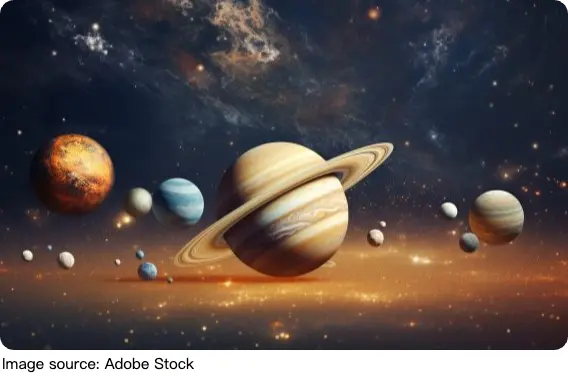
The core engine of starlight
At the center of a star, immense pressure and heat force hydrogen atoms to smash together and form helium. This process, called nuclear fusion, releases an enormous amount of energy. For a star like our Sun, the core temperature sits around 15 million degrees Celsius, and that's enough to keep the reaction going steadily for about 10 billion years. The energy produced works its way outward over thousands of years before finally escaping into space as light. So when you feel sunlight on your face, you're feeling photons that started their journey deep inside the Sun long before humans even existed.
Mass sets the brightness limit
Not all stars are created equal. A star's mass is the single biggest factor in how bright it appears. More massive stars have stronger gravity, which squeezes their cores harder and drives fusion at a much faster rate. A star with ten times the Sun's mass, like the blue supergiant Rigel in Orion, burns through its fuel so aggressively that it shines tens of thousands of times brighter than the Sun. But that intensity comes with a price. Rigel will only live for a few million years before it explodes, while the Sun will keep shining for billions more. Smaller stars, like the red dwarf Proxima Centauri, are the opposite. They fuse hydrogen slowly and steadily, shining dimly for trillions of years.
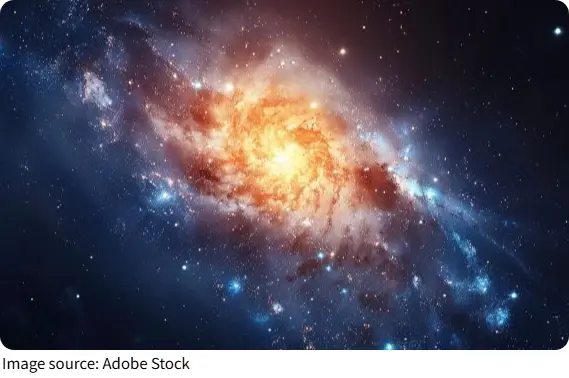
Temperature paints the color
You've probably noticed that stars aren't all white. Some look reddish, others blue-white, and that color tells you about their temperature. Cooler stars, around 3,000 degrees Celsius at their surface, emit most of their light in the red part of the spectrum. Betelgeuse, the bright red shoulder of Orion, is a perfect example. Hotter stars, reaching 30,000 degrees or more, shine with a blue-white glow, like Sirius in the constellation Canis Major. Temperature also ties directly to brightness because hotter surfaces radiate far more energy per square meter. That's why a blue star like Sirius outshines a red star of similar size by a massive margin.
Size changes the total output
Temperature alone doesn't tell the whole story. A star's total brightness also depends on how large its surface area is. Think of two stars with identical surface temperatures, one the size of the Sun and another that's a hundred times wider. The bigger one has vastly more surface area to radiate from, so it pumps out far more light. Red giants like Arcturus in Boötes are relatively cool, around 4,000 degrees, but they're so enormous that they appear very bright in our sky. Meanwhile, white dwarfs like Sirius B are incredibly hot but tiny, about the size of Earth, so they emit very little total light despite their scorching surfaces.
Distance tricks your eyes
Here's the frustrating part: brightness as you see it from Earth doesn't always reflect a star's true power. A star can be incredibly luminous but appear dim simply because it's far away. Astronomers call the apparent brightness what you see from Earth, and absolute magnitude the true luminosity. The Sun looks blindingly bright, but that's only because it's 150 million kilometers away. If you moved the Sun to the distance of Alpha Centauri, about 4.37 light-years away, it would look like just another bright point of light, no more impressive than many others. When you look at the night sky, you're seeing a mix of nearby dim stars and distant blazing giants, all flattened into the same two-dimensional view.
So next time you glance up at a star, remember it's not just glowing. It's a balancing act between mass, temperature, size, and distance, all working together to create that tiny twinkle you see. Go find Rigel one evening and think about how it's burning through its life at a pace that makes the Sun look like a slow and steady tortoise. That should make the sky feel a little more alive.