A Star's Full Life Story

Margot
| 20-09-2026
 · Science Team
Hello, let's get started. You probably think of stars as permanent fixtures, those steady little lights that have been up there since before you were born.
But the truth is, a star's life is a constant battle against gravity, and it ends in ways that range from quietly cooling off to exploding with more energy than an entire galaxy.
It starts with a slow collapse
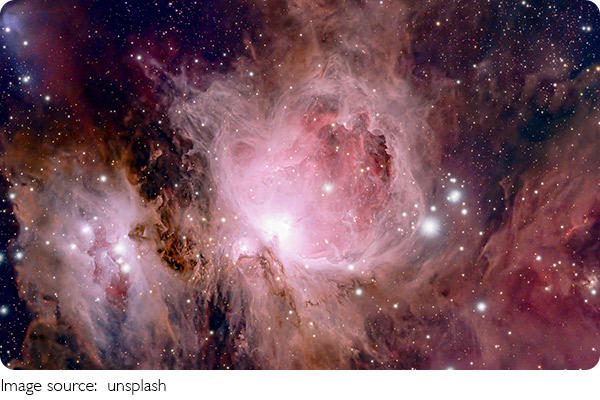
Stars don't just appear out of nowhere. They begin inside giant clouds of gas and dust called molecular clouds, and the process is almost embarrassingly slow at first. One of the closest examples is the Orion Nebula, about 1,344 light-years away, where new stars are actively forming right now. Inside these clouds, something triggers a clump to start collapsing-maybe a shockwave from a nearby supernova, maybe just a random density fluctuation. As that clump shrinks, it heats up, and after about 10 million years of squeezing, the core gets hot enough-roughly 10 million Kelvin-to ignite hydrogen fusion. That's the moment a star is officially born, and it settles into what astronomers call the main sequence.
The long middle act is a balancing act
Here's where things get interesting. For most of a star's life, it's doing nothing but fusing hydrogen into helium in its core, and that fusion pushes outward while gravity pulls inward. When those two forces balance perfectly, the star stays stable. Our Sun is in this phase right now, and it's been doing it for about 4.6 billion years. The bigger the star, the shorter this phase lasts. A star like our Sun will stay on the main sequence for roughly 10 billion years total, but a massive star like Betelgeuse, which is about 20 times the Sun's mass, burns through its fuel in just a few million years. It's almost counterintuitive-the biggest stars live the shortest lives because they burn so violently.
The red giant phase changes everything
When a star runs out of hydrogen in its core, the balancing act falls apart. The core contracts and heats up while the outer layers expand enormously, and the star becomes a red giant. Our Sun will do this in about 5 billion years, swelling past the orbit of Mercury and probably Venus, though Earth's fate is still debated. For lower-mass stars like the Sun, this is where helium starts fusing into carbon and oxygen. But here's the catch-the temperatures never get high enough to fuse carbon into heavier elements. So when the helium runs out, the star sheds its outer layers into a beautiful shell of glowing gas called a planetary nebula. The Ring Nebula in Lyra is a perfect example, and what's left behind is a tiny, dense object about the size of Earth called a white dwarf.
Massive stars die spectacularly
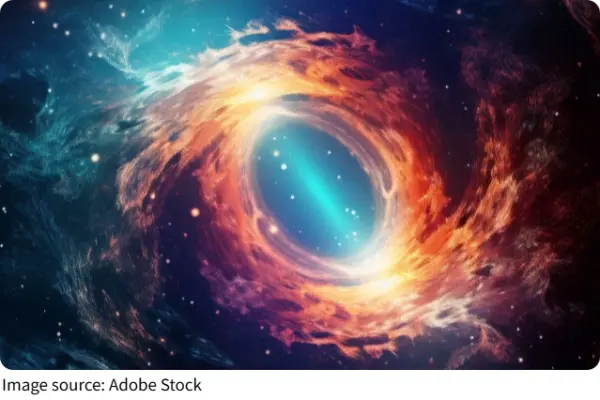
Stars more than about eight times the Sun's mass don't fade quietly. They go through successive fusion stages, building up layers of heavier elements like onions-carbon, neon, oxygen, silicon-until they reach iron. And iron is where fusion stops giving energy and starts costing it. The core collapses in less than a second, and the star explodes as a supernova, briefly outshining its entire galaxy. The Crab Nebula, which exploded in 1054 and was recorded by Chinese astronomers, is a famous example of what's left behind. What remains after the explosion depends on the original mass. A star between about 8 and 20 solar masses leaves behind a neutron star, a city-sized object so dense that a teaspoon of it would weigh about a billion tons on Earth. Stars above that threshold collapse completely into a black hole, like the one at the center of the Milky Way, which weighs about 4 million times the Sun's mass.
Why the endings matter to you
This isn't just abstract astronomy. Every atom of carbon in your body, every oxygen molecule you breathe, was forged inside a star that exploded long before the Earth existed. The iron in your blood came from a supernova. When astronomers study stellar deaths, they're literally tracing where you came from. And the timescales are humbling-a star like the Sun lives about 10 billion years, and the universe is only about 13.8 billion years old, so the very first generation of Sun-like stars is only now starting to die.
The next time you look up at a clear night sky, remember that each point of light is mid-battle. Some are just igniting in nurseries like the Orion Nebula, others are stable and middle-aged like our own Sun, and a few are already dying, their light telling you the story of their final moments. Go out and find Betelgeuse in Orion's shoulder-it's a red supergiant that could explode any time in the next 100,000 years. When it does, it'll be visible in daylight. And that's not a tragedy. That's just the universe recycling itself, the same way it recycled the atoms that made you.