Fascinating Brown Bear Facts

Ethan Sullivan
| 10-03-2026
 · Animal Team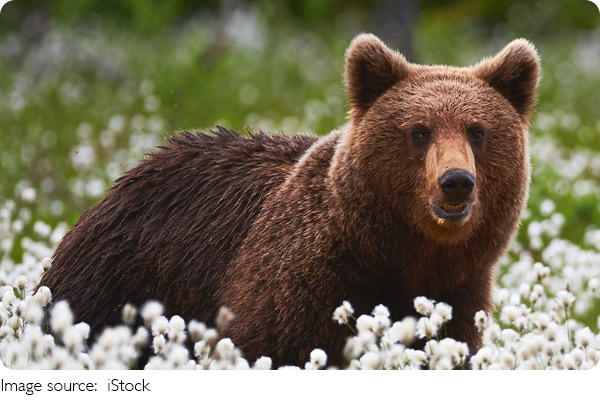
The first time I saw a brown bear on a wildlife documentary, I was struck by its sheer size and presence: broad shoulders, thick fur, and a steady gait that somehow conveyed both grace and power.
But beyond this awe inspiring appearance lies a creature with an astonishing array of adaptations for survival.
From remarkable dietary flexibility to surprising social behaviors and seasonal changes, brown bears (Ursus arctos) are among the most fascinating mammals in the world. Their story is one of resilience, versatility, and evolution across continents and climates.
Drawing on research from trusted scientific sources, this article explores the biology, behavior, and unique characteristics of brown bears—animals that continue to captivate scientists and nature enthusiasts alike.
Physical Traits and Distribution
1. Size and build
Brown bears are among the largest members of the bear family. Adults can weigh anywhere from about 135 kg (300 pounds) to over 360 kg (800 pounds), depending on subspecies and region. The Kodiak bear, a subspecies found only on Kodiak Island in Alaska, can weigh up to 720 kg (1,600 pounds), making it one of the largest land carnivores on Earth. Their long, muscular limbs and large paws with strong claws help them dig for roots, catch fish, and navigate rugged terrain.
2. Wide geographic range
Brown bears have the most extensive range of any bear species, inhabiting forests, mountains, tundra, and coastal areas in North America, Europe, and northern Asia. In North America, they are often called grizzly bears when living inland, though they belong to the same species. Their ability to thrive in diverse habitats highlights their ecological versatility.
3. Physical adaptation
The classic brown bear shoulder ridge is a large muscle mass used in digging and foraging. Their fur color can range from light tan to dark brown, and even nearly black, depending on age, location, and season, offering effective camouflage in various environments.
Feeding and Foraging Behavior
1. Omnivorous and opportunistic diet
Brown bears are true omnivores, consuming a wide variety of food items. Their diet includes berries, roots, grasses, insects, fish, small mammals, and carrion. In coastal regions during salmon spawning seasons, bears may eat up to 90 pounds (about 40 kg) of food a day to build energy reserves for winter.
2. Dietary flexibility, season by season
Seasonal changes significantly influence what brown bears eat. In spring and summer, they may focus on high protein sources like fish and small mammals, while in autumn, fruits, nuts, and vegetation become important to increase energy storage ahead of winter. Their ability to shift between plant and animal foods is key to surviving in varied climates and ecosystems.
3. Foraging techniques
Bears use their strong sense of smell to locate food over long distances and their powerful claws to dig for roots, insects, and burrowing animals. During salmon runs, they patiently wait along riverbanks, displaying remarkable patience and skill as they catch fish.
Reproduction and Life Cycle
1. Mating and birth
Brown bears typically mate from late spring through early summer. After delayed implantation—a reproductive adaptation that aligns birth with winter denning—females give birth during winter inside dens. Litters usually consist of one to three cubs, which are born blind, hairless, and weighing less than a kilogram (about 2 pounds).
2. Growing up with mom
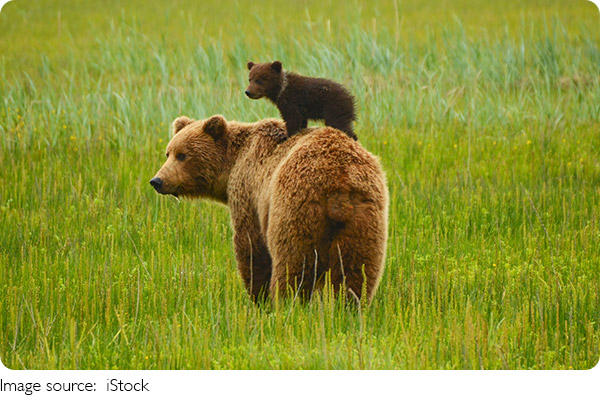
Cubs remain with their mothers for up to two to three years, during which they learn essential survival skills, such as foraging techniques, territory navigation, and predator awareness. This extended maternal care helps young bears build strength and independence before establishing their own territories.
3. Longevity and survival
In the wild, brown bears can live up to about 25 years, though life expectancy can vary based on habitat, food availability, and human pressures. In protected environments, they can live longer due to fewer threats and stable food sources.
Behavior, Ecology, and Human Interaction
1. Solitary but social when needed
Brown bears are generally solitary animals, except for mothers with cubs or during abundant feeding events. In places like coastal Alaska during salmon runs, dozens of bears may congregate to access rich food sources, showing a rare form of social tolerance driven by necessity.
2. Hibernation and survival strategy
As winter approaches, brown bears enter dens where they reduce their metabolic rate and sleep through the cold months. Prior to denning, they eat intensively to build thick layers of energy that sustain them during periods of inactivity.
3. Balancing coexistence with humans
Brown bears often face challenges due to habitat loss, human expansion, and occasional conflicts. While they are classified globally as a species of least concern, certain regional populations are protected due to localized threats. Conservation efforts focus on habitat preservation, reducing human bear conflicts, and raising public awareness about coexistence.
Brown bears remind us that survival in the natural world depends on flexibility, resilience, and adaptation. Their omnivorous diet, expansive range, and remarkable physiological traits showcase a species finely tuned to thrive across varied ecosystems. Whether foraging for salmon at a river's edge or digging for roots in a forest clearing, the brown bear's behavior offers a window into the wonders of wildlife adaptation. Observing their lives helps us appreciate not only their strength and presence but also the delicate balance that sustains the wider natural world.