Tree Climbing Bird
Mukesh Kumar
| 31-01-2026
 · Animal Team
Lykkers, have we ever paid attention to a small bird that seems to ignore gravity and walk straight down a tree trunk? That bird is the nuthatch, scientifically known as Sitta europaea.
The nuthatch is a small but very active songbird that lives widely across Europe and parts of Asia. At first glance, it may not look very special, but once we observe its behavior, we quickly realize that this bird is truly different from most others.
Its ability to move freely up and down tree trunks makes it one of the most unique birds in forest environments.
How We Can Recognize a Nuthatch
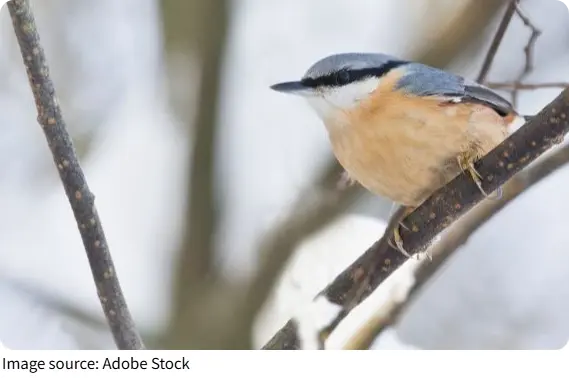
We can recognize a nuthatch by its compact body, short tail, and strong legs. Its back is usually blue-gray, while the belly can be white, light brown, or soft orange depending on the region. A clear black line runs from the beak through the eye, giving it a sharp and alert expression. The beak is long and pointed, perfect for picking insects out of tree bark. Even though it is small, the nuthatch looks strong and confident when it moves around.
Where Nuthatches Like to Live
We usually find nuthatches in mature forests with tall, old trees. They prefer deciduous forests or mixed forests, especially areas with oak or beech trees. These environments provide plenty of food and natural holes for nesting. Nuthatches like stable living conditions, and most pairs keep the same territory all year. Once they choose a forest area, they stay there unless the habitat changes too much. This strong connection to one place helps them know their surroundings very well.
A Smart Nest Builder
We can say the nuthatch is a clever builder. It often uses natural holes in trees or old holes made by woodpeckers. But what makes it special is how it adjusts the entrance. If the hole is too big, the female uses mud to make it smaller. She carefully shapes the opening so that only the nuthatch can pass through easily. This helps protect the eggs and young birds from danger. Inside the nest, the bird lays about six to nine white eggs with small red spots, placed on a soft base made of wood material.
What Nuthatches Eat
We mainly see nuthatches eating insects, especially during spring and summer. Caterpillars, beetles, and small insects hidden in bark are their favorite food. In autumn and winter, they also eat seeds and nuts. Thanks to their strong beak, they can break open hard shells by pressing food into tree cracks and hitting it repeatedly. This behavior looks simple, but it shows how well the bird uses its environment to solve problems.
The Famous Tree-Walking Skill
We often say the nuthatch is a “tree walker” because it can move down a tree head first. Most birds can only climb upward, but the nuthatch can go both directions with ease. This special skill allows it to reach insects hidden in places that other birds cannot reach. By searching different parts of the tree, the nuthatch reduces competition for food and increases its chances of survival. This ability is one of the main reasons why it is so successful in forest ecosystems.
Food Storage Behavior
We also notice that nuthatches like to store food. They hide seeds and nuts in tree bark, under leaves, or inside small holes. Later, when food becomes harder to find, they return to these spots. This shows that nuthatches have a good memory and strong planning skills. Food storage helps them survive cold seasons and keeps their energy level stable throughout the year.
Living Close to Humans
We often see nuthatches in parks and gardens, especially in areas with bird feeders. They are not shy and quickly learn where easy food sources are. Sometimes they even chase away smaller birds from feeding areas. Their bold and curious personality makes them fun to watch. Many people enjoy seeing how they take one seed at a time and fly away to hide it somewhere nearby.
Natural Challenges
We should understand that nuthatches face natural challenges in the wild. Birds of prey are their main natural danger. However, nuthatches are fast, alert, and good at hiding, which helps them avoid trouble. The bigger issue comes from habitat changes. When large forests are cut into smaller areas, some local groups may disappear. Still, because nuthatches can adapt well, they remain common in many regions.
Conservation Status
We can feel relaxed knowing that the nuthatch is listed as “Least Concern” by international conservation groups. This means the species is not currently at risk. Its population is large, and its distribution area is wide. As long as forests with old trees are protected, the nuthatch will continue to thrive.
Why the Nuthatch Is Important
We may think the nuthatch is just another small bird, but it plays an important role in nature. By eating insects, it helps control their numbers. By storing seeds, it may support plant growth indirectly. Its presence also reflects the health of forests, since it prefers well-developed woodland areas.
A Final Reflection
Next time we walk through a forest or even a quiet park, let us slow down and look at the tree trunks. We might notice a small bird moving in an unexpected way, calmly walking down instead of flying. The nuthatch reminds us that even the smallest creatures can have amazing skills. By observing them, we not only enjoy nature but also learn how smart and balanced the natural world truly is.
Acrobatic Bird -The Delightful Eurasian Nuthatch: Sitta europaea
Video by The Birds Nerds